Signing Order: Sequential and Parallel Signing

The arrangement that determines when recipients can complete their actions in a multi-person signing process.


- Sequential steps create dependencies between recipients.
- People in the same step can act in parallel.
- Signing order does not grant authority or establish legal validity.
What is signing order?
Signing order determines when recipients receive access to their actions in a signing request. It organizes dependencies between people, rather than changing their authority or the agreement’s legal effect.
Sequential versus parallel signing
Sequential signing places recipients in successive steps. Parallel signing lets several recipients act within the same step without prescribing an order between them. A workflow can combine both patterns.
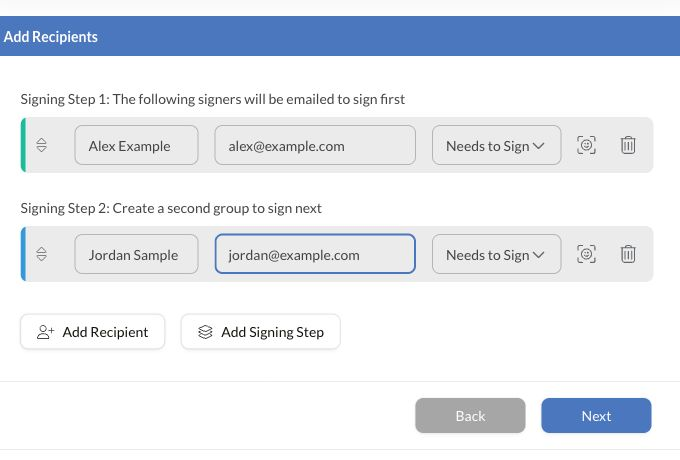
In Sign.Plus’s documented signing-step example, two people share the first step and the next signer proceeds after both finish. Recipients are notified when their step is reached.
What does a combined order look like?
Suppose two client representatives share step 1 and a company representative is in step 2. Either client representative can complete their action first, but the company representative waits for both. Placing all three in one step would instead remove that dependency. This describes routing; it does not establish whose signature is legally required.
What should the sender decide?
Determine who actually needs to act and assign the appropriate recipient roles and document fields. Unnecessary sequential steps can leave actions waiting on someone who did not need to sign first.
Signing order is one part of the broader e-signature workflow. The existing Sign.Plus workflow page covers product configuration context.
A Common Case: Sequencing client and company signatures
Suppose a Texas insurance agency wants two client representatives to act in the first step, followed by the agency’s representative. A combined parallel-and-sequential order could express that arrangement without requiring an order between the two client representatives.
FAQs
Can a request combine parallel and sequential signing?

Yes. Several people can share a step, followed by another step that starts after the preceding required actions are complete.
Does signing order change who is authorized to sign?
No. It organizes when actions become available; legal signing authority is a separate requirement.

Featured Articles
See All





Confédération Suisse
Confederazione Svizzera
Confederaziun Svizra
Swiss Confederation
Innosuisse – Schweizerische Agentur für Innovationsförderung